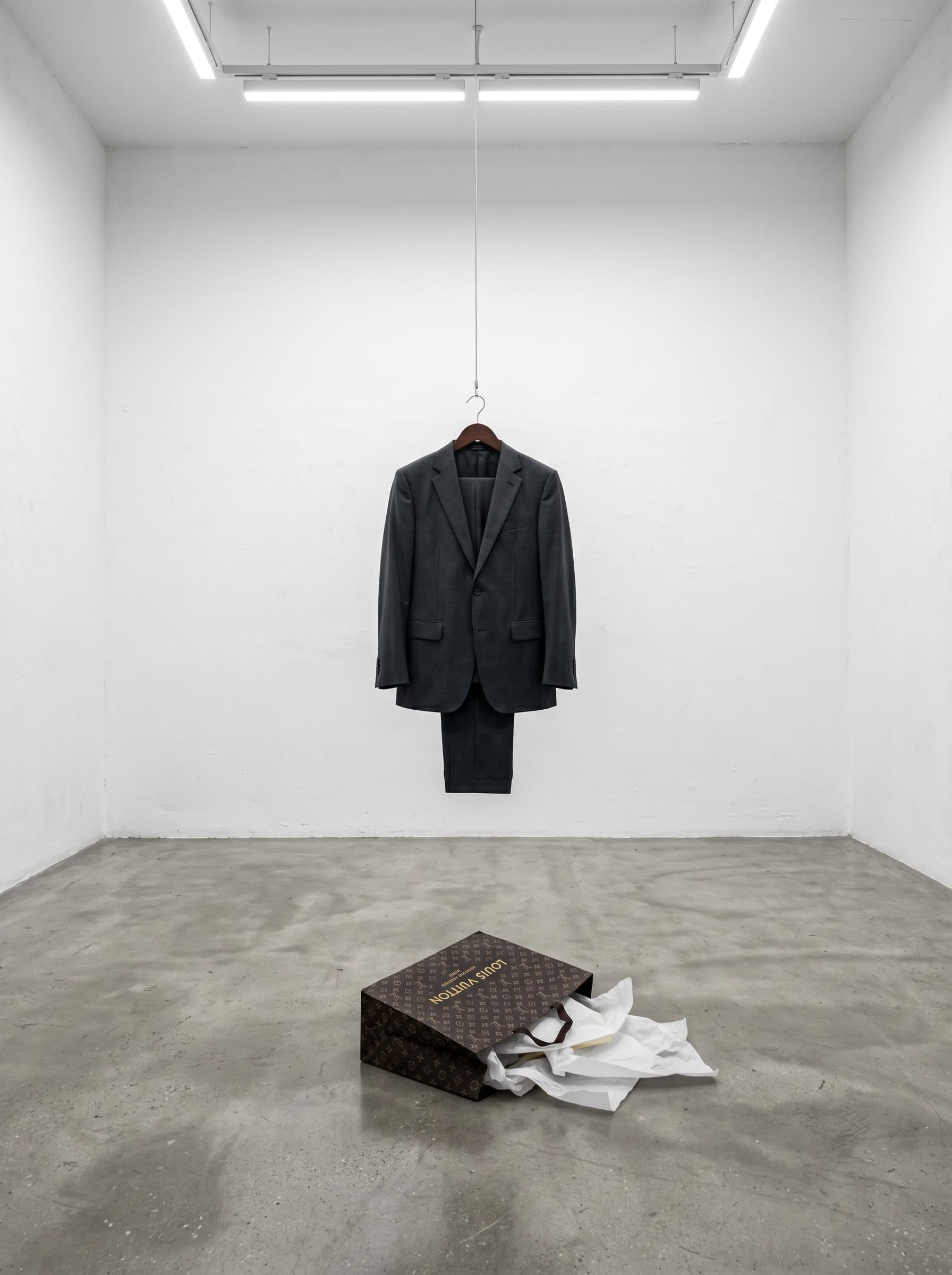
A man who dresses in logos is a man who has handed his introduction to a corporate entity. Before he speaks, before his handshake, before any assessment of his competence can begin, the room has read the name on his chest and filed him accordingly. He is no longer an individual. He is a distribution channel.
This is the problem with logo-driven menswear. It is not merely a matter of taste. It is a matter of agency. When a man’s clothing announces a brand before it announces him, he has outsourced the most personal signal he owns. And the signal he sends is clear: I am not confident enough to be recognized without this label.
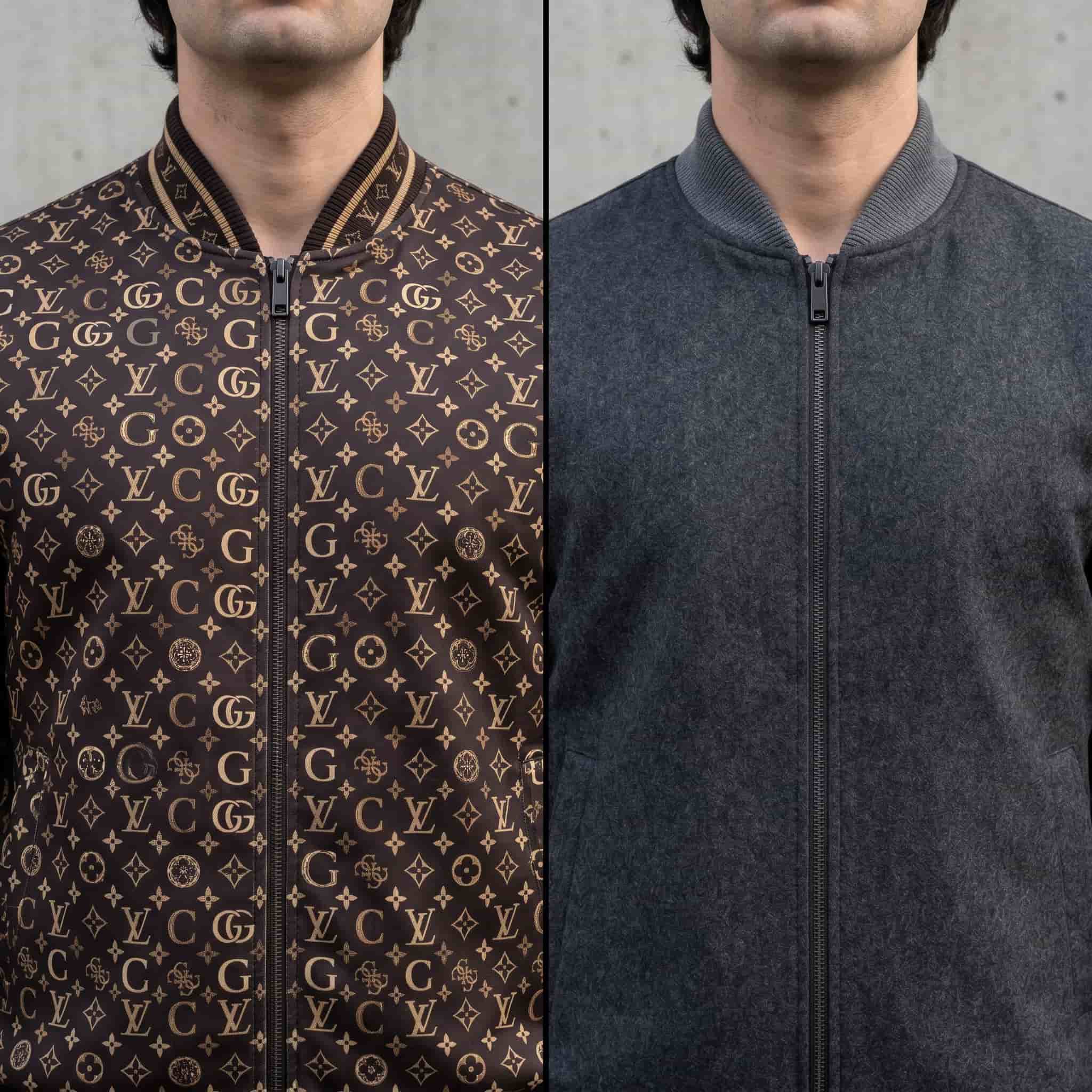
The Logo as Psychological Crutch
I spent years watching men reach for branded pieces in the quiet moments before a purchase. The hesitation. The glance at the logo. The almost imperceptible exhale when they found one large enough to be seen from a distance. That exhale was not satisfaction. It was relief. Relief that the work of being noticed had been done for them.
Logos function as social shorthand. They offer immediate, pre-fabricated meaning. A man wearing a loud monogram does not need to explain his taste. The logo does it for him. But the explanation is borrowed, and borrowed authority never holds. It is why logo-heavy outfits so often feel hollow. The man inside them has replaced substance with signage.
The psychology is well understood on the buying floor. The most logo-obsessed customers were rarely the most successful. They were the ones still proving something, to themselves or to a world they felt had not yet validated them. They dressed to compensate. And compensation dressing is the most visible form of insecurity a man can wear.
Why Expensive Brands Can Look Cheap
There is a paradox in luxury menswear that the industry prefers not to discuss. The more visible the branding, the more disposable the garment feels. This is not because the materials are inferior. It is because the design has been optimized for recognition, not for longevity. A jacket with a repeating monogram is locked into a specific moment. It cannot transcend seasons because its identity is tethered to a marketing cycle. Wearing it two years later looks not like timelessness but like delayed consumption.
The garment that carries no logo, by contrast, is free. A plain navy blazer from a maker known only for its cut and cloth does not age. It simply becomes the blazer you have always owned. That is the difference between buying a product and investing in a presence. Logos tether you to the store. Silence tethers you to yourself.
Question: What are the core differences between logo-driven dressing and presence-driven dressing?
Dimension | Logo-Driven Dressing | Presence-Driven Dressing |
|---|---|---|
Source of authority | Borrowed from brand equity | Built from fit, fabric, and personal composure |
Visual message | “I can afford this label” | “I understand proportion and context” |
Longevity | Tied to trend cycles and seasonal campaigns | Independent of time, improves with age |
Social signal | Seeks external validation | Assumes internal standards |
Psychological driver | Compensation, belonging anxiety | Self-possession, quiet confidence |
The Client Who Undressed His Identity
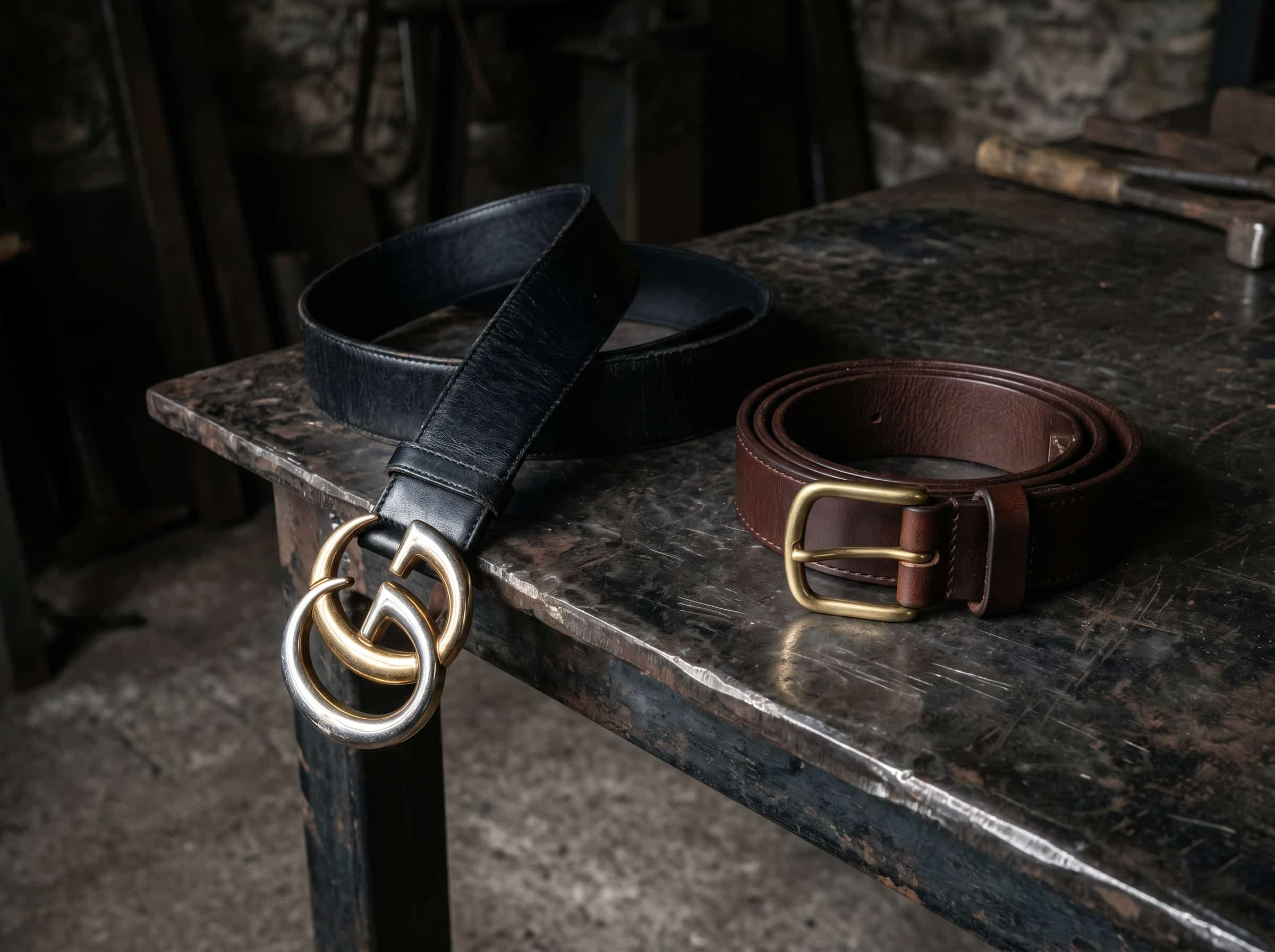
A client once arrived at my studio wearing a jacket patterned with the initials of a house that had no idea he existed. His trousers carried a similar mark. His belt shouted a third name. When I asked him what he wanted to communicate, he paused for a long time and said, “That I’ve made it.” The irony was painful. He had made it, by any reasonable measure, yet he was still dressing like a man trying to prove he belonged in the room.
We removed the branded pieces one by one. Single-ply cashmere replaced the monogrammed sweater. A clean dark worsted suit replaced the statement jacket. A belt with no buckle plaque replaced the metallic declaration of allegiance. He stood in front of the mirror and said nothing for almost a minute. Then he nodded. The man who left that day did not look like he had made it. He looked like he had always been there. That is the upgrade no logo can provide.
What Replaces the Logo
The men who worry most about removing logos from their wardrobe are usually the ones who have not yet developed trust in their own taste. They fear that without the brand, there will be nothing left to say. They are wrong. A garment stripped of branding reveals everything that actually matters: the quality of its cloth, the precision of its cut, the relationship between its silhouette and the body inside it.
A man who dresses without logos is forced to develop judgment. He must learn to read shoulder pitch, trouser drape, collar roll. He must understand why a fabric works or fails. In doing so, he becomes the author of his own image, not a billboard for a creative director he will never meet. This is the threshold of masculine style. Everything before it is costume.
A Final Indictment
The menswear industry profits from male insecurity. It sells the logo as a shortcut to status, knowing that the shortcut never arrives. Men keep buying because the promise is intoxicating: wear this, and you will be the man you want to be. But the man you want to be does not need a monogram to announce himself. He walks into a room, and the room adjusts, not because his jacket has a name, but because his presence has weight.
What piece do you think men over-flex the most?